

None of this really matters anyway.
Moderators: Pastor Gary, The J2 Mod Squad
-
Russell Roberts

- Hey, hey, hey
- Posts: 1617
- Joined: September 30th, 2008, 1:19 pm
- Location: USA,Mississippi
- Contact:
None of this really matters anyway.
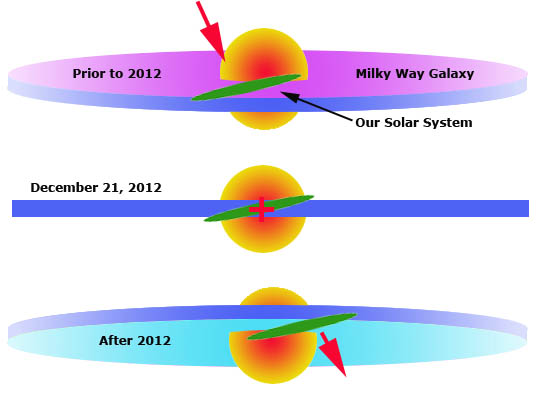
According to the Mayan calendar, earth will get sucked into a black hole in 2012.
-
Jennifer Smith

- Moderator
- Posts: 3745
- Joined: June 23rd, 2003, 11:40 am
- Location: USA,Indiana


-
RamboPreacher

- RamboPreacher
- Posts: 12355
- Joined: July 17th, 2004, 5:41 pm
- Location: USA, Texas
-
Russell Roberts
- Hey, hey, hey
- Posts: 1617
- Joined: September 30th, 2008, 1:19 pm
- Location: USA,Mississippi
- Contact:
-
RamboPreacher
- RamboPreacher
- Posts: 12355
- Joined: July 17th, 2004, 5:41 pm
- Location: USA, Texas
IF, what they say about the ecliptic is true, then one of the things that is speculated to happen is that the magnetic poles will completely reverse. that would be a pretty large challenge.irthnvesl wrote:Rambo, dang it, you're ruining my fun.
 much of our ecosystem has it's fingers in the magnetosphere. (does that help?)
Thanks, Brent "RamboPreacher" Hoefling
-
Jennifer Smith
- Moderator
- Posts: 3745
- Joined: June 23rd, 2003, 11:40 am
- Location: USA,Indiana
-
Mole_J

- I can see clearly now!
- Posts: 2434
- Joined: August 22nd, 2003, 9:56 am
- Location: USA,Virginia
- Contact:
Not only the Mayans, but other point to 2012 being the last year.
The Web Bot Project is also predicting world wide calamity in the year 2012.
A guy who studied the IChing, Chinese's book of changes, saw a pattern and produced a time line using this pattern. It ended on Dec 21, 2012.
Then you have the pole shift that RP already mentioned. This maybe the scariest part I think.
There is more here
You can also watch a History Channel: Decoding the Past Doomsday 2012. here
-
RamboPreacher
- RamboPreacher
- Posts: 12355
- Joined: July 17th, 2004, 5:41 pm
- Location: USA, Texas
most people don't get "ecliptic", unless they can see what is being talked about.
I have been having these discussions on other forums for several years now.
their calendering system, was essentially a set of circls/gears that meshed and cycled. cycles within cycles.
since I am a geek with archaeology and stuff...
The Mayan cycles were a bit more complex than our day/week/month/year.
Every day in a 52 year period had a unique name from a combination of various different cycles (similar to the idea that there is a Monday 1st January only every 7 years or so).
This 52 year cycle has is called a Calendar Round. To keep track of dates on longer time scales the Mayans then had what's known as the Long Count, which provides a unique numerical indicator for each day. Mayans did not count in base ten like we did, but usually instead in base 20 (although not always, many more ancient languages were base 6, as well). The Mayan long count can be summarized as:
#days Mayan count
1day=1 kin
20days= 20 kin= 1 uinal
360days= 360 kin= 18 uinal= 1 tun
7200days= 7200 kin= 360 uinal= 20 tun= 1 kactun
144000days= 144000 kin= 8000 uinal= 400 tun= 20 kactun= 1 bactun
The name for a Mayan epoch apparently translates as 13 bactuns, which you can see is 13*144000 days or 5125.26 years (roughly). There is actually some minor disagreement over when the current Mayan long cycle started, but it was probably either August 11th or 13th 3114 BC, which means it comes to an end on either Dec 21st or 23rd 2012.
As I mentioned above the Mayan calendar was designed to be cyclical, so the fact that the long count comes to an end in "Dec 2012", while having some significance for the Maya as the end of a great cycle (much like we celebrated the millennium (incorrectly as it happens) on Dec 31st 1999), does not mean that the "world will come to an end".
It's actually true that there are Mayan names for periods of time longer than 13 bactuns, so that their calendar doesn't even end then, and even if it did there is no evidence to suggest that they (or anyone for that matter) have any special knowledge about the end of the world. they just didn't stick around long enough to build a new "calendar cycle" gear set.
I believe there is much evidence for the ecliptic theory, as the Mayans were extremely superior Astronomists, or so many have come to believe in archaeological circles.
Thanks, Brent "RamboPreacher" Hoefling


-
Russell Roberts
- Hey, hey, hey
- Posts: 1617
- Joined: September 30th, 2008, 1:19 pm
- Location: USA,Mississippi
- Contact:
Rambo....I'm speechless. That was awesome brother. Let me ask you about a theory I have. It sounds a little crazy but I have this working hypothesis about the repetition of the construction of pyramids in various places around the earth and their connection with various passages in I Enoch. Check out this article I wrote.
http://russellaroberts.blogspot.com/200 ... f-god.html
http://russellaroberts.blogspot.com/200 ... f-god.html
-
RamboPreacher
- RamboPreacher
- Posts: 12355
- Joined: July 17th, 2004, 5:41 pm
- Location: USA, Texas
good read.
I am not all into pseudo-archaeology, pursuing the lost continent of Atlantis, or the like. however, there are many ancient understandings that seem to be incongruous.
With that said, I am also studying ancient human behavior (especially religious). and have come to a conclusion that people have always been "smart" (perhaps, better - have the potential of being...). since the creation.
I believe the Antikythera device as example shows an interesting dichotomy of how most people understand "primitive" cultures. A particular thought I have had about the 3-age-system (stone-age/bronze age/iron age) and that the book of Genesis has mention of iron working, clearly not in the "iron age". So many in the secular scholar community will say - "see, there, it must all be a lie."
My thoughts is that there are evidences of iron work for ornamentation, at least well back into the bronze age (Biblical times). and further that even in our own time (kind of still considered "Iron age-ish", since we use steel) - we know how volatile (otherwise untreated) Iron is when exposed to the elements. how in the world is the archaeological world supposed to assume there will be "much" iron works found at all?! some few artifacts here and there, that happened to have just the right circumstances that it wouldn't dissolve back into the earth. (which is what we have).
I believe the use of these metals are a fallacious way to delineate times.
in any case, back to people. I believe that we are "smart" as I mentioned. we have different technologies as we apply our smarts to life-applications, and not just for the use of the aristocracy. but I believe people in Biblical times were just like we are. given a particular challenge, they would figure a way to conquer it; just as we do.
which brings me to the next step (repeatable, in my opinion). we have begin to rely on our tools so much that we don't know what we used to know just a short time in years ago (relatively speaking). our computers and machines work for us, and in part - think for us. (posting this message brings to mind a particular one - I don't spell very well, but I rely on the computer to help me with it.
I believe this has happened at least several times in our historical past, though in somewhat of a spiral cycle where not all knowledge is lost. the above mentioned device as example again. it can't be a one-off, the gears are too precise and after some study, also appear to be mass manufactured, made.
I have not made a study of the placement of the pyramids around the earth. but I have made a discovery that some may already come to understand and realize. it is a small interpretive discovery for me (again, you all may know this, but it was an epiphany for me). The Biblical account of Jacob's ladder.
The Hebrew translation for what we (most English translations) call a ladder, is more like staircase, or steps. take that in conjunction with the religious Mesopotamians, and their ziggurats - that were supposed to be according to Akkadian and Babylonian cuneiform tablets and other sources - they believe this was a way to reach heaven (or many other words for the dwelling place of the local deities).
one can see this in the city and tower of Babel as well. but my point is that the dream Jacob may have had, may have been influenced by his knowing about, and perhaps seeing such a pagan temple, and associating it to his, monolitristic/monotheistic beliefs in God. the angels going up and down, are similar to the ancient Babylonian deities being described as coming to earth (usually to visit themselves upon the women).
sorry for the book-post, i was typing off the top of my head and it came out quickly. time for a cup of coffee.
TL;DR - I believe people are smart and can figure stuff out. I believe we live in cycles of losing and gaining "knowledge". I dont believe the 3-age system is accurate in archaeology. Jacobs Ladder was probably a ziggurat.
Thanks, Brent "RamboPreacher" Hoefling
-
Russell Roberts
- Hey, hey, hey
- Posts: 1617
- Joined: September 30th, 2008, 1:19 pm
- Location: USA,Mississippi
- Contact:
Rambo,
Very interesting brother. I was familiar with the idea of Jacob's ladder being a ziggarat but, inexplicably (given my blog post), have never tied the two together in quite that way. Brings some interesting thoughts to mind with respect to Acts 2 in which we see a reversal of what happened at Babel and Jesus statement regarding angels ascending and descending on the Son of Man. This is getting good brother.
Let's give this some thought. In Babel, man was trying to ascend to God. In Acts 2, quite the reverse was happening. God was coming down to man and being poured into his temple - the Church. A reversal of Babel (gate of god) and a reversal of what happened in the Garden with Adam. Thoughts?
-
dolfan

- Established Member
- Posts: 8016
- Joined: March 17th, 2004, 1:25 pm
- Location: USA,Alabama
- Contact:
Rambopreacher wrote
I'd like to recommend two books by Neil Postman: Technopoly, first and foremost, and second, if the first one strikes you as interesting, Amusing Ourselves To Death. I think these two books have tremendous messages for believers and how we should conceive the world we're in.
which brings me to the next step (repeatable, in my opinion). we have begin to rely on our tools so much that we don't know what we used to know just a short time in years ago (relatively speaking). our computers and machines work for us, and in part - think for us. (posting this message brings to mind a particular one - I don't spell very well, but I rely on the computer to help me with it.
I believe this has happened at least several times in our historical past, though in somewhat of a spiral cycle where not all knowledge is lost. the above mentioned device as example again. it can't be a one-off, the gears are too precise and after some study, also appear to be mass manufactured, made.
I'd like to recommend two books by Neil Postman: Technopoly, first and foremost, and second, if the first one strikes you as interesting, Amusing Ourselves To Death. I think these two books have tremendous messages for believers and how we should conceive the world we're in.
Human government bears the same relation to hell as the church bears to heaven. (David Lipscomb, On Civil Government, 72).
Return to “Jude 2 General Discussion Forum”
Who is online
Users browsing this forum: No registered users and 17 guests
